How to care for nails after shellac: getting them back in shape
 SIMEHA InstitutBeauty salon for women and men
Updated on · 10 min read
Key takeaways
- A nail damaged after gel polish has almost always been damaged by a forced removal: never scratch or peel off the polish.
- Slightly soft nails straight after removal are normal, and this state generally passes.
- To get them back in shape: cut them short, nourish them every day with an oil, protect them from water and detergents.
- A nail does not repair itself, it renews itself: allow several months, in general, for a fingernail.
Contents
You have had your gel polish taken off. And there it is, a nasty surprise.
Your nails are soft. Thin. Sometimes ridged or peeling, sensitive under hot water. They no longer look like anything much.
If that is your case, you are not alone: wondering how to care for nails after shellac, as many people call gel polish, is common, and it always worries people.
Let us start with the good news. The nail grows back, and the damaged part ends up being replaced.
The less good news? You will need patience. A nail does not repair itself, it renews itself.
In this guide, you will see why your nails are weakened, what is normal and what is not, and how to look after them week after week. This advice comes from our own manicure practice at SIMEHA Institut.
Why are your nails damaged after gel polish?
Nails damaged after gel polish are almost always damaged by the removal, not by the polish. When polish is scratched or peeled off, it takes part of the nail surface with it.
Here is how it happens.
The nail is made of stacked layers. Gel polish holds firmly to the top layer. If you pull at a lifted corner, you tear that layer off with the polish.
The result: the nail becomes thinner, more flexible and more sensitive.
Other causes sometimes add to it:
- filing the surface too hard before the polish goes on or during removal;
- polish kept on too long: the polished part, which is stiff, acts as a lever on the regrowth;
- back-to-back manicures with no nourishing of the nail in between;
- a removal product left on too long, which dries out the nail and the skin.
And the polish itself? Applied and removed correctly on a healthy nail, it generally causes no problem.
Soft nails after removal: is that normal?
Yes: slightly soft nails straight after a removal are normal, and this state generally passes. The nail has just been softened by the removal product, and it has lost the stiff layer of polish that had supported it for weeks.
But not all soft nails are the same. Look for your case:
| What you notice | What it generally means | What to do |
|---|---|---|
| Flexible nails on the day of removal, with no pain | A passing state | Nourish them and wait a few days |
| Thin nails that bend and are sensitive to hot water | Part of the surface has been removed | Cut them short, nourish them, take a break |
| Nails that peel at the edge | A dried-out or weakened nail | File them gently, nourish them every day |
| White spots, ridges | Marks left by the removal or by a knock | Wait for the regrowth |
| A change of colour, lifting, pain | Not a matter for a beauty treatment | See a doctor |
In the first situation, a few days are enough. In the others, you have to wait for the nail to grow back.
The first steps, straight after removal
Straight after removal, cut your nails short, file them gently and nourish them. A short nail bends less and breaks less: it is the most effective step.
In order:
- Shorten your nails. A short length and a rounded shape limit knocks.
- File in one direction only, with a gentle file, without going back and forth.
- Do not buff the surface. Buffing an already thin nail makes it even thinner.
- Apply an oil to the nail and the skin around it, and massage for a few seconds.
- Leave your nails bare for a few days.
Has your removal just been done at a salon? Then these steps have already been carried out in part.
The removal with filing and oil, offered at SIMEHA Institut at CHF 20, includes them.
Day to day: two words, nourish and protect
Day to day, nail care after gel polish comes down to two words: nourish and protect. An oil every day, gloves for water and detergents.
Is that all? Almost. Here are the details.
Nourish with an oil
Apply a drop of oil to each nail and the skin around it, once a day, preferably in the evening. Massage it in.
A shop-bought cuticle oil is fine; simple plant oils, such as sweet almond oil or castor oil, are also commonly used.
What counts is not the product, but regularity. One application a day for several weeks does more than an expensive product used three times.
Moisturise your hands
A hand cream after each wash keeps the skin and cuticles supple. Dry cuticles crack and pull on the nail.
Protect them from water and detergents
Water swells the nail, then it shrinks as it dries. This back and forth weakens it, especially if it is already thin. Detergents, for their part, dry it out.
The solution comes down to one word: gloves. For the washing-up and for the housework.
Go easy on your nails
Do not use your nails as tools. Do not bite them, do not pull at the little bits of skin.
These habits damage the area where the nail is formed.
Week after week: what to expect
Getting a nail back in shape follows the pace of its regrowth: the damaged part is not repaired, it is gradually replaced. It generally takes several months for a fingernail to renew itself completely.
Here is the usual course, as a guide; it varies from one person to another.
- The first days. The nails are flexible. They firm up a little as they dry and as you nourish them.
- The first weeks. A band of new nail appears at the base. It is smoother and firmer than the rest. The damaged part does not change: it moves towards the fingertip.
- The following weeks. Each time you shorten your nails, you remove a little of the damaged part.
- After several months. The nail is completely renewed.
One tip so that you do not lose heart: do not look at the tip of the nail. Look at the base.
That is where the improvement shows.
What it is better to avoid in the meantime
While your nails are recovering, avoid anything that thins them, dries them out or puts them to work. A few weeks of care are generally enough.
- The buffer. It gives a nice finish, but removes material.
- Acetone removers, which dry out the nail.
- Long nails, which act as a lever.
- A new gel polish on a nail that is still thin or painful.
- "Hardening" products used without restraint. Ask for advice before applying them every day.
Do you really want to wear colour? A regular polish, applied over a base coat and taken off with a gentle remover, is the lightest solution.
Should you take a break between two manicures?
A break between two gel manicures is not compulsory, but it is advised as soon as your nails show signs of fatigue. Your nails give the signal, not the calendar.
Take a break if your nails are thin, soft or ridged, if they peel or if they are sensitive. Start again when they are firm once more.
And if they are fine? If your nails are in good condition and each removal is done properly, you can go from one manicure to the next.
During the break, hand care with no polish looks after your nails and cuticles. At SIMEHA Institut, express hand care costs CHF 30 and complete hand care, with a soak, a scrub, cuticle care, filing and a moisturising massage, costs CHF 70.
How do you stop it happening again?
To stop damaging your nails with gel polish, always have it removed properly and do not keep it on too long. These two rules avoid most of the damage.
In practice:
- Never scratch polish that is lifting. File the edge and book an appointment.
- Have the polish removed at a salon. At SIMEHA Institut, removal costs CHF 20.
- Keep to the removal date. As soon as the regrowth is clear, it is time.
- Nourish your nails even under the polish: oil on the cuticles benefits the nail that is growing.
- Mention your fragile nails to the beautician before each manicure.
The habits that make a manicure last without damaging the nail are set out in the guide how long does shellac last.
When should you see a doctor?
See a doctor or a dermatologist if a nail changes colour, lifts, thickens or hurts, or if the skin around it is red and swollen. These signs are not a matter for a beauty treatment, and a beautician cannot treat them.
A nail that is simply thin or soft after a removal is not in this category: it needs time and care, not treatment.
Where can you have your hands looked after?
SIMEHA Institut offers hand care, manicures and gel polish removal at Rue Caroline 41, 1227 Genève, Suisse, in the Acacias district. All the treatments, their duration and their price are presented on the manicure page.
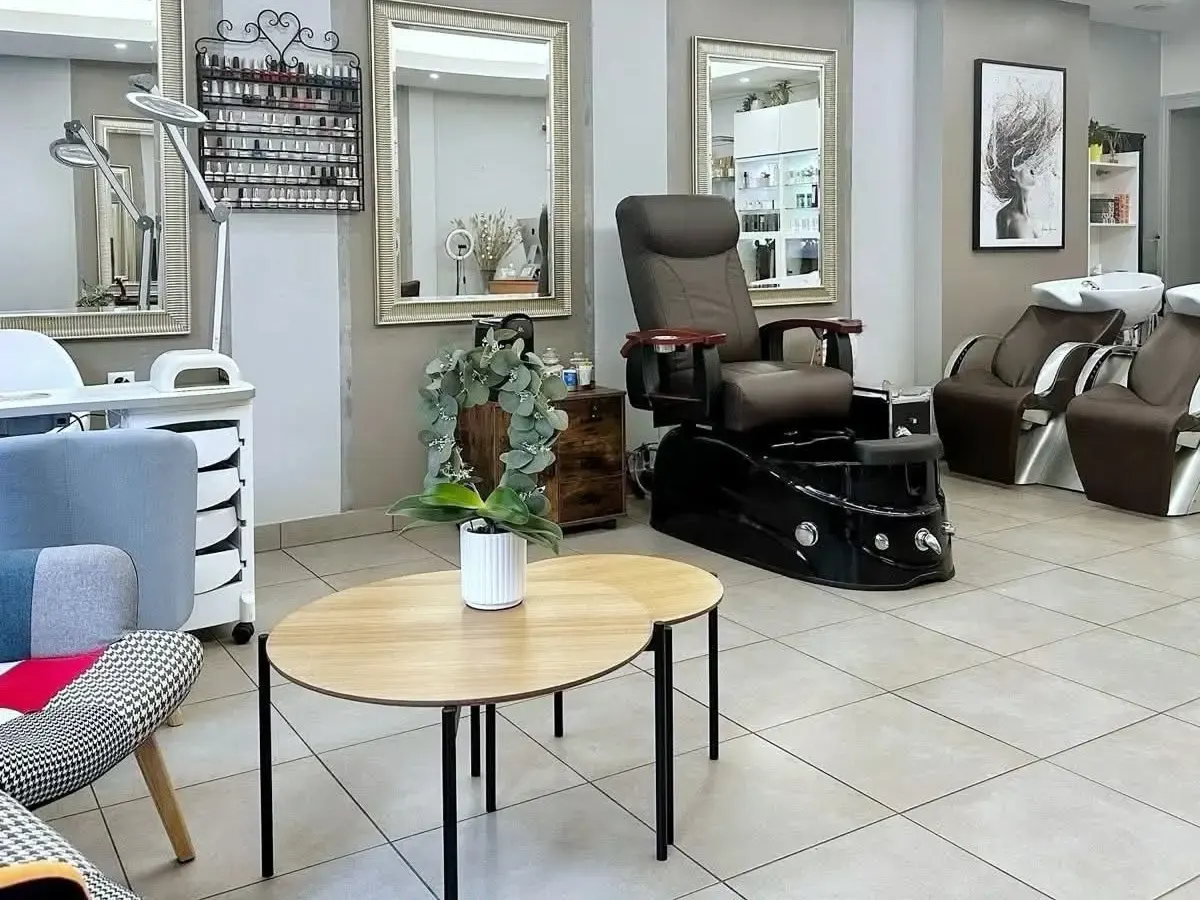
You book online, with no account, and you pay at the salon. If your nails are damaged, say so when you arrive: the beautician adapts the treatment.
Frequently asked questions
Why are my nails soft after gel polish removal?
After a removal, the nail has been softened by the removal product and has lost the stiff layer of polish that supported it. In general, it firms up again within a few days. If it stays thin and painful, it is often because part of its surface was pulled off with the polish.
How long does a damaged nail take to recover?
A nail does not repair itself: the damaged part is replaced by regrowth. Allow several months, in general, for a fingernail to renew itself completely; the time varies from one person to another.
Should you take a break between two gel manicures?
A break is not compulsory if your nails are in good condition and removals are done properly. It is advised, however, as soon as your nails become thin, soft or ridged, or start to peel.
Which oil should you use for nails?
A shop-bought cuticle oil is perfectly fine. Simple plant oils, such as sweet almond oil or castor oil, are also commonly used to nourish the nail and the skin around it. What matters is regularity: one application a day.
Can you put polish back on damaged nails?
It is better to wait until the nail has firmed up again. In the meantime, hand care with no polish looks after your nails and cuticles: at SIMEHA Institut, it costs CHF 30 for the express version and CHF 70 for the complete version.
When should you see a doctor?
See a doctor or a dermatologist if a nail changes colour, lifts, thickens or hurts, or if the skin around it is red and swollen. These signs are not a matter for a beauty treatment.
Conclusion
If your nails are damaged after gel polish, the culprit is almost always the same: a forced removal. So rule number one is simple. No more scratching, no more peeling, ever.
To get them back in shape, three habits: cut them short, nourish them every day with an oil, protect them from water and detergents. Then let time do its work: the regrowth gradually replaces the damaged part.
It takes patience, that is true. But your nails come back, and you can go back to polish as soon as they are firm again. This time, with a removal at the salon.
Are your nails simply soft, or really thinned? If you do not know, show them to us: we will tell you what to do.